Chinese Body Parts Vocabulary: 60+ Essential Words for Health and Daily Life
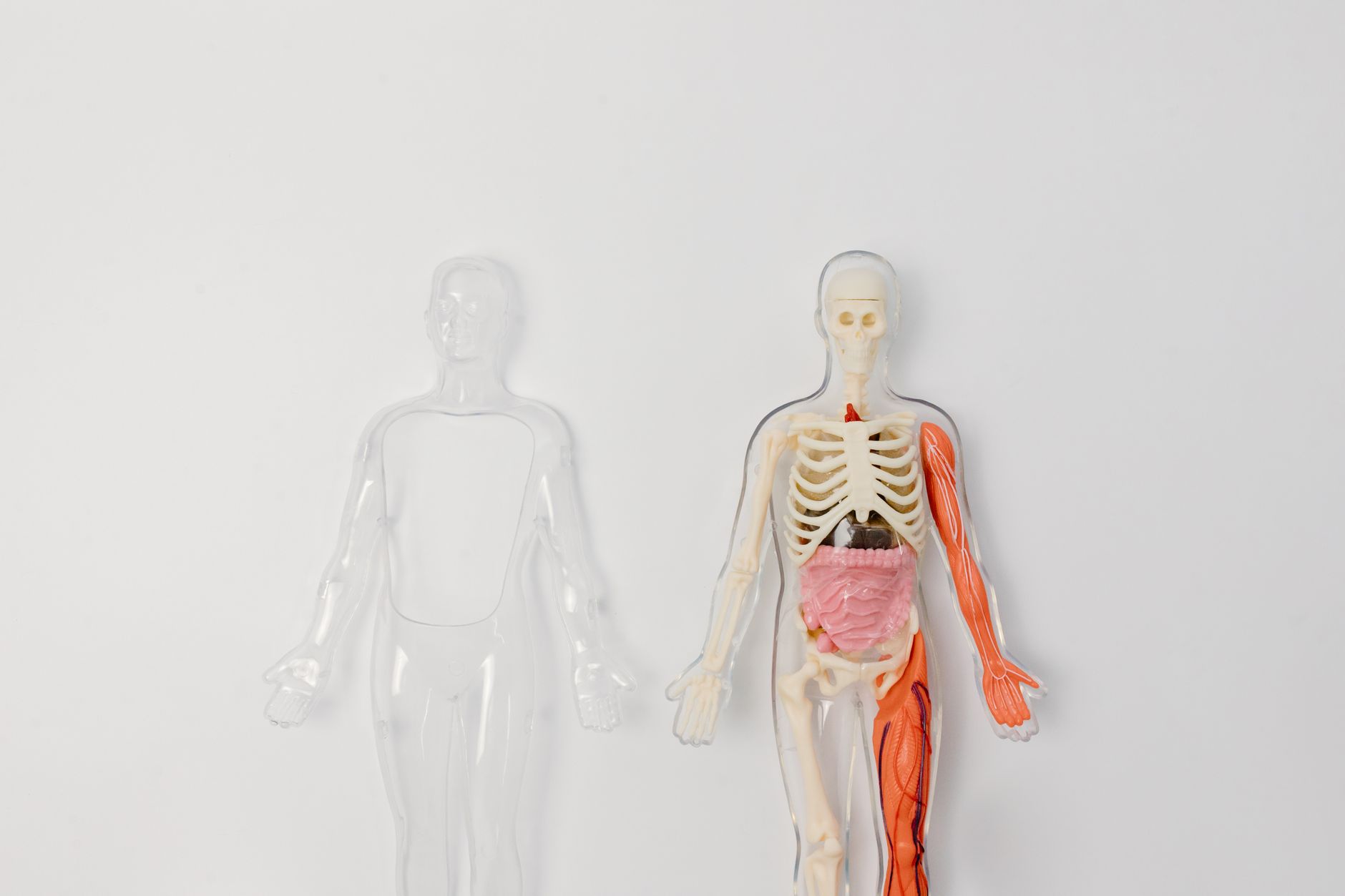
Whether you need to describe an injury to a doctor, follow a fitness class, or simply talk about your morning routine, body part vocabulary is one of the most practical word groups in Chinese. Yet many learners skip this topic until they actually need it — and then panic at a clinic trying to explain where it hurts.
This guide covers 60+ body part words organized from head to toe, plus the radical pattern that connects most of them, health phrases for real medical situations, and cultural idioms that use body parts in surprising ways. By the end, you'll feel confident describing any part of the body — and understanding when a Chinese speaker uses body-part expressions in everyday conversation.
Head and Face (头和脸)
The head and face have the most vocabulary because Chinese distinguishes many parts that English groups together. Here's every word you need:
| Chinese | Pinyin | English | Memory Tip |
|---|---|---|---|
| 头 | tóu | head | Top of everything |
| 头发 | tóufa | hair | 头 (head) + 发 (emit/grow) |
| 脸 | liǎn | face | 月 radical = flesh |
| 额头 | étóu | forehead | 额 = the upper part of face |
| 眼睛 | yǎnjing | eyes | 目 radical = eye |
| 眉毛 | méimao | eyebrows | 眉 looks like brows over an eye |
| 鼻子 | bízi | nose | 鼻 is its own radical |
| 耳朵 | ěrduo | ears | 耳 radical looks like an ear |
| 嘴巴 | zuǐba | mouth | 口 radical = mouth |
| 牙齿 | yáchǐ | teeth | 牙 looks like two teeth |
| 舌头 | shétou | tongue | 舌 = tongue sticking out of 口 |
| 下巴 | xiàba | chin | 下 = below/under |
| 脖子 | bózi | neck | 月 radical = flesh |
Quick practice sentence: 她的眼睛很大,鼻子很小。(Tā de yǎnjing hěn dà, bízi hěn xiǎo.) — Her eyes are big, and her nose is small.
Upper Body (上半身)
The upper body includes your torso, arms, and hands. Notice how many of these characters share the 月 (flesh) radical — we'll explore this pattern in detail below.
| Chinese | Pinyin | English | Notes |
|---|---|---|---|
| 肩膀 | jiānbǎng | shoulders | Both chars have 月 |
| 胳膊 | gēbo | arm | The whole arm |
| 手臂 | shǒubì | arm (formal) | More written/formal |
| 手肘 | shǒuzhǒu | elbow | 手 (hand) + 肘 (joint) |
| 手 | shǒu | hand | One of the first chars to learn |
| 手指 | shǒuzhǐ | finger | 手 (hand) + 指 (point) |
| 手腕 | shǒuwàn | wrist | 腕 has the 月 radical |
| 胸 | xiōng | chest | 月 radical |
| 背 | bèi | back | Also means "carry on back" |
| 腰 | yāo | waist/lower back | 月 radical + 要 (want) |
| 肚子 | dùzi | belly/stomach | Most common word for stomach |
Useful phrases:
- 我的肩膀很酸。(Wǒ de jiānbǎng hěn suān.) — My shoulders are sore.
- 他的手很大。(Tā de shǒu hěn dà.) — His hands are big.
- 我腰疼。(Wǒ yāo téng.) — My lower back hurts.
Lower Body (下半身)
Lower body vocabulary is essential for sports, exercise, and describing injuries. Chinese makes clear distinctions between the upper leg, lower leg, and foot that English often blurs.
| Chinese | Pinyin | English | Details |
|---|---|---|---|
| 臀部 | túnbù | buttocks | Formal; 屁股 (pìgu) is casual |
| 大腿 | dàtuǐ | thigh | 大 (big) + 腿 (leg) |
| 膝盖 | xīgài | knee | Common injury site |
| 小腿 | xiǎotuǐ | calf/shin | 小 (small) + 腿 (leg) |
| 脚踝 | jiǎohuái | ankle | 脚 (foot) + 踝 (ankle bone) |
| 脚 | jiǎo | foot | Below the ankle only |
| 脚趾 | jiǎozhǐ | toes | 脚 (foot) + 趾 (digit) |
| 脚后跟 | jiǎohòugēn | heel | 脚 + 后 (behind) + 跟 (follow) |
💡 大 vs 小 Pattern
Chinese uses 大 (big) and 小 (small) to distinguish upper and lower parts: 大腿 = thigh (big leg), 小腿 = calf (small leg). This same pattern appears in other areas too.
Internal Organs (内脏)
You don't need to memorize every organ, but knowing the key ones helps with health discussions, food vocabulary (some are eaten!), and understanding common expressions.
| Chinese | Pinyin | English | Cultural Note |
|---|---|---|---|
| 心脏 | xīnzàng | heart (organ) | 心 alone = heart/mind/feelings |
| 肺 | fèi | lungs | 月 radical |
| 肝 | gān | liver | Common in food: 猪肝 (pork liver) |
| 胃 | wèi | stomach (organ) | 胃疼 = stomachache (medical) |
| 肾 | shèn | kidney | Important in Chinese medicine |
| 脑 | nǎo | brain | 脑子 = brain (colloquial) |
| 骨头 | gǔtou | bone | 骨 radical = bone |
| 血 | xuè / xiě | blood | xuè (formal), xiě (colloquial) |
| 皮肤 | pífū | skin | 肤 has 月 radical |
Note: 肚子 (dùzi) is the everyday word for "stomach/belly" used in casual conversation. 胃 (wèi) is the medical/anatomical term for the stomach organ specifically. When seeing a doctor, use 胃 for precision.
The 月 Radical — Your Body Part Shortcut
Here's a secret that saves dozens of hours of memorization: the 月 radical (called 肉月旁, ròu yuè páng) appears in the vast majority of body part characters. Originally from 肉 (ròu, meat/flesh), it was simplified to look like 月 (moon) but has nothing to do with the moon when it appears on the left side of a character.
When you see a character with 月 on the left, there's a strong chance it relates to the body. This is one of the most useful radical patterns in Chinese — learn more about how radicals work in our complete radicals guide.
Beyond 月 — Other body-related radicals: While 月 is the most common, several other radicals frequently appear in body part characters. The 目 (mù) radical, meaning "eye," shows up in 眼 (eye), 眉 (eyebrow), 睛 (pupil), and 眨 (blink). The 口 (kǒu) radical, meaning "mouth," appears in 嘴 (mouth), 咽 (throat), 吐 (spit), and 咬 (bite). The 骨 (gǔ) radical, meaning "bone," is found in 骼 (skeleton), 骸 (remains), and 髓 (marrow). The 手/扌(shǒu) radical connects to actions performed by hands, such as 打 (hit), 抓 (grab), 拉 (pull), and 推 (push). Recognizing these radical families allows you to decode unfamiliar characters much faster — when you spot 目 on the left side of a character, you can reasonably guess it relates to vision or the eye area, even before you look it up.
Describing Health and Symptoms
This is where body part vocabulary becomes truly practical. Whether you're at a pharmacy, clinic, or describing how you feel to a friend, these patterns will serve you well.
Pattern 1: Body Part + 疼/痛 (téng/tòng) = hurts
| 头疼 (tóu téng) | headache |
| 牙疼 (yá téng) | toothache |
| 胃疼 (wèi téng) | stomachache |
| 腰疼 (yāo téng) | lower back pain |
| 膝盖疼 (xīgài téng) | knee pain |
Pattern 2: Body Part + 不舒服 (bù shūfu) = uncomfortable
- 我的肚子不舒服。(Wǒ de dùzi bù shūfu.) — My stomach feels uncomfortable.
- 我的眼睛不舒服。(Wǒ de yǎnjing bù shūfu.) — My eyes feel uncomfortable.
Pattern 3: Common symptoms
- 发烧 (fāshāo) — have a fever
- 咳嗽 (késou) — cough
- 流鼻涕 (liú bítì) — runny nose
- 拉肚子 (lā dùzi) — diarrhea
- 过敏 (guòmǐn) — allergies
- 受伤了 (shòushāng le) — injured
🏥 At the Doctor — Sample Dialogue
医生:哪里不舒服?(Doctor: Where does it feel uncomfortable?)
你:我头疼,还有一点发烧。(You: I have a headache and a slight fever.)
医生:多长时间了?(Doctor: How long has it been?)
你:已经两天了。(You: It's been two days already.)
Pattern 4: Describing injuries and conditions
Beyond simple pain, you may need to describe specific conditions to a doctor or pharmacist. Here are essential medical phrases built around body parts:
- 扭伤了脚踝 (niǔshāng le jiǎohuái) — sprained my ankle
- 骨折 (gǔzhé) — bone fracture
- 肌肉酸痛 (jīròu suāntòng) — muscle soreness
- 皮肤过敏 (pífū guòmǐn) — skin allergy / rash
- 视力下降 (shìlì xiàjiàng) — vision deterioration
- 耳鸣 (ěrmíng) — ringing in the ears (tinnitus)
- 喉咙发炎 (hóulóng fāyán) — throat inflammation
- 关节炎 (guānjiéyán) — arthritis (joint inflammation)
Notice the pattern: many medical conditions combine a body part with a condition word like 疼 (pain), 炎 (inflammation), 酸 (sore), or 肿 (swollen). Once you know the body parts from the tables above and a handful of condition words, you can understand and construct dozens of medical terms on your own. For example, 肿 (zhǒng, swollen) combines with nearly any external body part: 脚肿了 (foot is swollen), 眼睛肿了 (eyes are swollen), 手指肿了 (finger is swollen).
Chinese Idioms Using Body Parts
Body parts appear in many Chinese idioms (成语, chéngyǔ) and everyday expressions. Learning these helps you sound more natural and understand native speakers.
| Idiom | Pinyin | Literal | Meaning |
|---|---|---|---|
| 心花怒放 | xīnhuā nùfàng | heart flowers bloom | Overjoyed, bursting with happiness |
| 目中无人 | mù zhōng wú rén | no one in the eyes | Arrogant, looking down on everyone |
| 手足无措 | shǒuzú wúcuò | hands and feet lost | Flustered, don't know what to do |
| 口是心非 | kǒu shì xīn fēi | mouth yes, heart no | Saying one thing but meaning another |
| 三头六臂 | sān tóu liù bì | three heads, six arms | Superhuman ability, very capable |
| 眼高手低 | yǎn gāo shǒu dī | eyes high, hands low | Ambitious but incompetent |
Everyday body-part expressions:
- 丢脸 (diūliǎn) — lose face (embarrassed)
- 放心 (fàngxīn) — put the heart down (relax, don't worry)
- 伤脑筋 (shāng nǎojīn) — hurt the brain (a headache to deal with)
- 动手 (dòngshǒu) — move the hands (start working / get physical)
- 插手 (chāshǒu) — insert hands (interfere in someone's business)
More body-part idioms worth knowing:
Beyond the formal four-character idioms above, Chinese has many vivid expressions that pair body parts in creative ways. The idiom 手忙脚乱 (shǒu máng jiǎo luàn) literally means "hands busy, feet chaotic" and describes someone in a frantic rush, fumbling through a task. 心直口快 (xīn zhí kǒu kuài), meaning "straight heart, fast mouth," describes a person who speaks bluntly without filtering their thoughts. 头重脚轻 (tóu zhòng jiǎo qīng), or "heavy head, light feet," describes something top-heavy or poorly balanced — used both literally and to describe plans that lack a solid foundation. 耳目一新 (ěr mù yī xīn), meaning "ears and eyes all refreshed," describes the feeling of encountering something pleasantly new and different. These expressions show how Chinese uses body parts as metaphors for mental states, personality traits, and abstract concepts — the body becomes a language for talking about the mind.
Body language and cultural differences:
Understanding body part vocabulary also helps you navigate cultural differences in body language between Chinese and Western contexts. In Chinese culture, pointing at your own nose with your index finger is the standard gesture for "me" — whereas Westerners typically point at their chest. When beckoning someone to come closer, Chinese speakers wave with the palm facing down and fingers pulling inward, which can look like "go away" to Westerners accustomed to an upward-facing palm. Nodding and bowing carry slightly different weight: a slight nod in Chinese culture can convey respect and acknowledgment more formally than in Western conversation. Physical contact also differs — while handshakes are common in business settings, close friends of the same gender may walk arm-in-arm (挽着胳膊, wǎnzhe gēbo) without any romantic implication, which can surprise Western visitors. Being aware of these differences prevents misunderstandings and helps you communicate more naturally when using your body vocabulary in real-life situations.
Practice Tips and Next Steps
Body part vocabulary sticks best when you connect words to physical experience. Here are proven study methods:
1. Touch-and-say drill: Touch each body part while saying the Chinese word aloud. Start from 头 and work down to 脚. Do this every morning for a week and you'll have the core 20 words memorized.
2. Radical grouping: Write out all the 月-radical body part characters together. Grouping by radical helps your brain categorize them and recognize new body-part characters you encounter later.
3. Symptom role-play: Practice the doctor dialogue above with a study partner. One person plays the doctor asking 哪里不舒服? and the other describes different symptoms each round.
4. Label your mirror: Put sticky notes with Chinese body part names on your bathroom mirror at the appropriate positions. You'll review them naturally every day.
5. Sports and exercise context: If you exercise regularly, learning body parts through workout instructions is highly effective. Phrases like 抬起你的手臂 (raise your arms), 弯曲膝盖 (bend your knees), and 转动脖子 (rotate your neck) combine body vocabulary with action verbs in a way that sticks because you are physically performing the movement as you learn the words. Follow Chinese-language workout videos on YouTube or Bilibili to hear body part vocabulary used naturally and repeatedly in context.
Use our Practice Sheet Generator to create custom writing practice for the characters in this guide. For more vocabulary building, explore our weather vocabulary and family terms guides. And if you're preparing for a proficiency exam, check our HSK preparation guide — body part vocabulary appears across HSK 2 through HSK 4.
🔧 Try These Tools
Frequently Asked Questions
How do I describe symptoms at a Chinese hospital? ▼
Use the pattern 我的 + body part + 不舒服 (bù shūfu, uncomfortable) or 疼 (téng, hurts). For example, 我的头疼 means "my head hurts" and 我的肚子不舒服 means "my stomach feels uncomfortable." You can add duration with 已经…了, like 已经两天了 (it's been two days already).
What's the difference between 脚 (jiǎo) and 腿 (tuǐ)? ▼
脚 specifically means "foot" — the part below the ankle. 腿 means "leg" — everything from the hip to the ankle. This is different from English where "leg" sometimes loosely includes the foot. In Chinese, the distinction is always clear. 大腿 is "thigh" and 小腿 is "calf/shin."
Why do some body parts have two characters while others have one? ▼
Single-character words like 手, 头, 心 are older classical Chinese. Two-character words like 眼睛, 鼻子, 耳朵 developed because adding a second syllable made speech clearer in conversation. In modern Mandarin, the two-character forms are standard for most body parts in everyday speech.
How do I learn body part characters faster? ▼
Many body part characters share common radicals. The 月 (moon/flesh) radical appears in 脚, 腿, 胳膊, 腰, 肚, 脸, 脑, and 肩. Learning this radical pattern helps you recognize dozens of related characters. Practice writing them grouped by radical for faster memorization.
Language Education Specialist
Yang Lin is a Taiwan-based bilingual educator specializing in Mandarin Chinese and Japanese instruction. With over 10 years of experience helping learners worldwide master East Asian languages, Yang creates practical tools and structured study guides that make language learning accessible, effective, and enjoyable. She holds a degree in Applied Linguistics and has taught students from more than 20 countries.
🗾 Interested in Japanese? Read our Japanese learning blog →