The Chinese Zodiac: Complete Guide to 12 Animals and Their Meanings
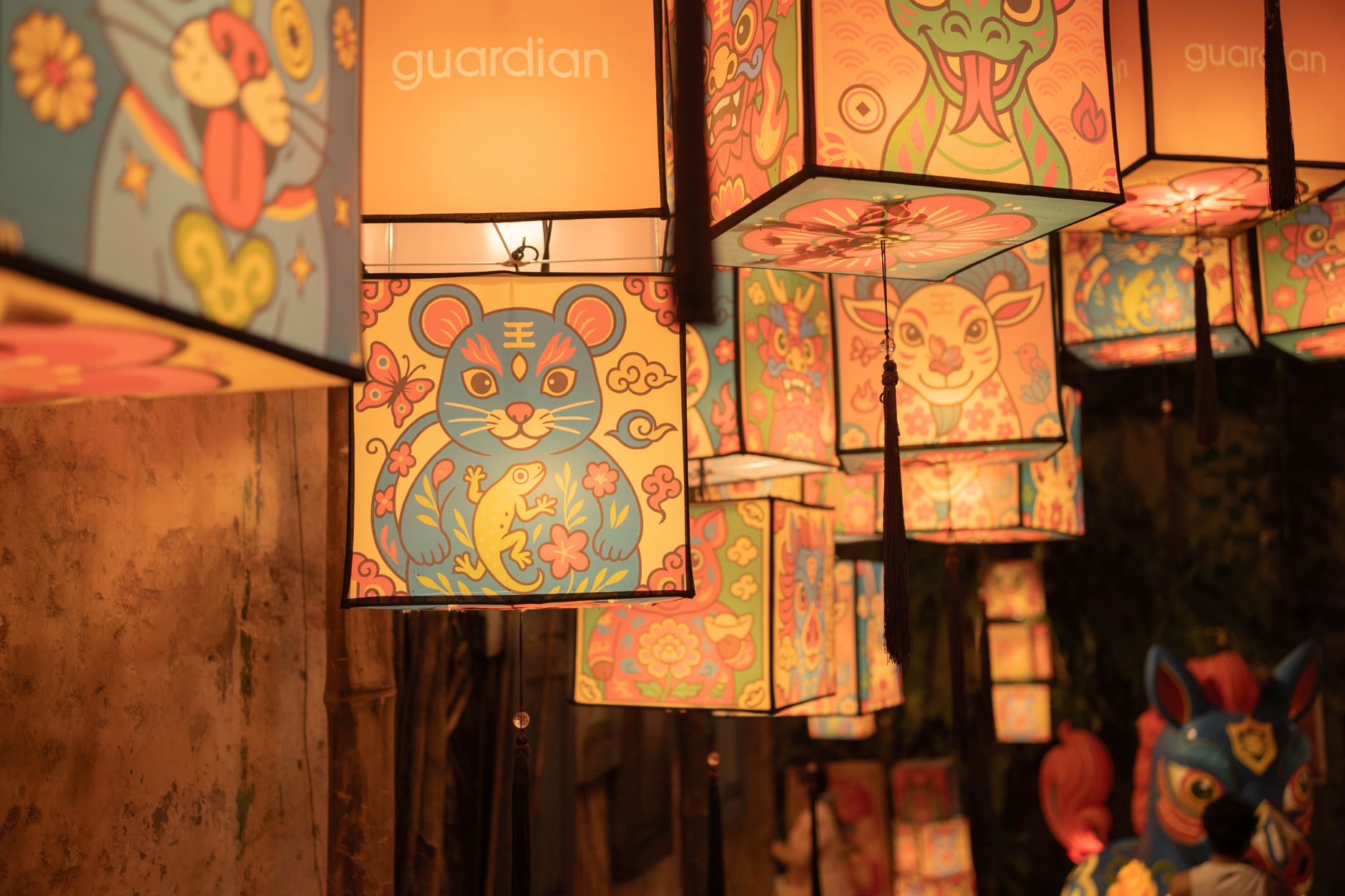
The Chinese zodiac (生肖 shēngxiào) is a 12-year cycle where each year is represented by an animal. Unlike Western astrology, which is based on birth month, the Chinese zodiac is determined by your birth year. It influences personality analysis, marriage compatibility, career choices, and even baby planning — Dragon years consistently see birth rate spikes across Chinese communities worldwide. Understanding the zodiac is essential for anyone interested in Chinese culture.
Origin of the Chinese Zodiac
The most famous origin story is the Great Race. The Jade Emperor (玉皇大帝) invited all animals to a race across a river — the first 12 to cross would earn a place in the zodiac.
Historical records suggest that the Chinese zodiac system dates back over 2,000 years. The earliest known reference appears in Chinese texts from the Warring States period (475–221 BCE), though the system was likely practiced in folk tradition long before it was recorded in writing. Some scholars believe the zodiac may have originated from ancient Chinese astronomers who observed Jupiter's approximately 12-year orbit around the sun and divided the celestial path into 12 segments, each associated with an animal.
Another theory ties the zodiac to early Chinese farming communities. Different animals held symbolic importance in agricultural life — the Ox represented hard labor in the fields, the Rooster signaled the start of a new day, and the Rat was associated with grain storage. Over centuries, these animal symbols became formalized into the 12-year cycle used for timekeeping and fortune-telling. By the Han Dynasty (206 BCE–220 CE), the zodiac system was widely established and had become an integral part of Chinese calendar culture, appearing on official documents and influencing court decisions.
The Cat is notably absent from the zodiac. According to popular legend, the Rat tricked the Cat by promising to wake it up for the race but then leaving without it. This story is often used to explain why cats chase rats in real life. Interestingly, the Vietnamese zodiac replaces the Rabbit with the Cat, making it the only major zodiac variant where the Cat holds a position.
🏁 The Great Race (Brief Version)
The Rat (clever but small) rode on the Ox's back and jumped off at the finish line, arriving first. The Ox came second. The Tiger swam against strong currents for third. The Rabbit hopped across stones and a floating log for fourth. The Dragon flew but stopped to make rain for farmers, arriving fifth. The Snake hid in the Horse's hoof and slithered out suddenly, scaring the Horse — Snake sixth, Horse seventh. The Goat, Monkey, and Rooster worked together on a raft — eighth, ninth, tenth. The Dog played in the water despite being a strong swimmer, coming eleventh. The Pig ate and napped, arriving last at twelfth.
The 12 Animals and Their Traits
| # | Animal | Chinese | Personality Traits | Recent Years |
|---|---|---|---|---|
| 1 | 🐀 Rat | 鼠 (shǔ) | Clever, resourceful, quick-witted | 2008, 2020 |
| 2 | 🐂 Ox | 牛 (niú) | Diligent, dependable, strong-willed | 2009, 2021 |
| 3 | 🐅 Tiger | 虎 (hǔ) | Brave, competitive, confident | 2010, 2022 |
| 4 | 🐇 Rabbit | 兔 (tù) | Gentle, elegant, alert | 2011, 2023 |
| 5 | 🐉 Dragon | 龙 (lóng) | Powerful, ambitious, charismatic | 2012, 2024 |
| 6 | 🐍 Snake | 蛇 (shé) | Wise, intuitive, graceful | 2013, 2025 |
| 7 | 🐴 Horse | 马 (mǎ) | Energetic, independent, adventurous | 2014, 2026 ⭐ |
| 8 | 🐐 Goat | 羊 (yáng) | Calm, gentle, creative | 2015, 2027 |
| 9 | 🐒 Monkey | 猴 (hóu) | Smart, mischievous, versatile | 2016, 2028 |
| 10 | 🐓 Rooster | 鸡 (jī) | Observant, hardworking, confident | 2017, 2029 |
| 11 | 🐕 Dog | 狗 (gǒu) | Loyal, honest, trustworthy | 2018, 2030 |
| 12 | 🐖 Pig | 猪 (zhū) | Generous, compassionate, diligent | 2019, 2031 |
Each animal in the zodiac carries both positive and negative traits. For example, the Rat is considered resourceful and adaptable, but can also be seen as cunning or overly cautious. The Dragon is admired for its ambition and leadership ability, yet may be perceived as arrogant or domineering. The Pig, while generous and warm-hearted, is sometimes characterized as naive or indulgent. Understanding both sides of each animal's personality is important in Chinese culture — people often consider their zodiac weaknesses as areas for self-improvement rather than fixed character flaws.
Career aptitudes are also associated with each animal. Rats are said to thrive in business and finance due to their sharp instincts. Tigers excel in leadership roles and competitive fields. Snakes are drawn to research, philosophy, and detective work because of their analytical minds. Horses prefer careers that offer freedom and variety, such as travel, journalism, or sales. These associations, while not taken as strict rules, often come up in casual career discussions and even in some traditional Chinese job-matching practices.
Find Your Zodiac Animal
To find your zodiac animal, match your birth year to the 12-year cycle. But remember: the Chinese zodiac follows the lunar calendar, not January 1st. If you were born in January or early February, you may actually belong to the previous year's animal.
💡 Quick Formula:
The most common question in Chinese: 你属什么?(nǐ shǔ shénme?) — What is your zodiac animal? Answer: 我属[animal]。(wǒ shǔ...) — I am the [animal]. For example: 我属龙 (I am the Dragon).
The lunar calendar boundary is a common source of confusion. Chinese New Year falls on a different date each year, typically between January 21 and February 20. For example, someone born on February 1, 1990 might assume they are a Horse (1990 is a Horse year), but Chinese New Year in 1990 fell on January 27 — so anyone born before that date would actually be a Snake (the previous year's animal). Always check the exact date of Chinese New Year for your birth year before determining your zodiac sign.
In modern China, asking someone's zodiac animal (你属什么?) is one of the most common icebreaker questions — similar to asking about star signs in Western countries. It is considered less direct than asking someone's age, yet it still reveals approximate age since the cycle repeats every 12 years. This makes it a culturally polite way to gauge someone's generation in social and professional settings.
Zodiac Compatibility
Traditional Chinese astrology groups the 12 animals into four "trine" groups of three. Animals in the same trine are considered highly compatible:
🐀🐉🐒
First Trine
Rat + Dragon + Monkey
Action-oriented, competitive
🐂🐍🐓
Second Trine
Ox + Snake + Rooster
Determined, intellectual
🐅🐴🐕
Third Trine
Tiger + Horse + Dog
Freedom-loving, humanitarian
🐇🐐🐖
Fourth Trine
Rabbit + Goat + Pig
Peaceful, artistic, nurturing
Beyond the trine groups, there are also "secret friend" pairs — two animals with a special bond that brings mutual support. These pairs are: Rat and Ox, Tiger and Pig, Rabbit and Dog, Dragon and Rooster, Snake and Monkey, Horse and Goat. When secret friends appear together in a relationship or business partnership, they are believed to complement each other's strengths and cover each other's weaknesses. For instance, the detail-oriented Rooster helps the big-picture Dragon stay grounded, while the Dragon gives the Rooster confidence to aim higher.
Zodiac compatibility plays a significant role in Chinese marriage traditions. Historically, families would consult a fortune teller (算命先生 suànmìng xiānshēng) to compare the zodiac signs and birth charts of a potential couple before approving an engagement. While this practice has become less rigid in modern urban China, many families — especially older generations — still consider zodiac compatibility when evaluating a prospective son-in-law or daughter-in-law. Some dating apps in China even include zodiac filters to match users with compatible signs.
In business, zodiac compatibility influences partnership decisions and negotiation strategies in some traditional circles. A business owner born in a Rat year might prefer partnering with someone born under the Dragon or Monkey sign, as these trine allies are believed to share similar ambition and work styles. While younger professionals may dismiss this as superstition, awareness of zodiac dynamics remains a useful cultural skill when working with Chinese clients and colleagues.
Most incompatible pairs (animals 6 positions apart):
- Rat ↔ Horse
- Ox ↔ Goat
- Tiger ↔ Monkey
- Rabbit ↔ Rooster
- Dragon ↔ Dog
- Snake ↔ Pig
These incompatible pairs are known as "clashing" animals (相冲 xiāng chōng). The conflict is thought to arise because animals on opposite sides of the zodiac wheel have fundamentally opposing personalities and energy types. The active, freedom-seeking Horse clashes with the detail-focused, cautious Rat. The stubborn Ox butts heads with the free-spirited Goat. However, Chinese astrologers also note that clashing signs can sometimes form dynamic and productive relationships if both parties are aware of their differences and willing to compromise.
Ben Ming Nian (本命年)
Your Ben Ming Nian (本命年 běn mìng nián) is when your zodiac year returns — every 12 years. Traditional belief holds that your Ben Ming Nian is an unlucky year because you are in conflict with the Tai Sui (太岁), the god who governs that year.
🔴 How to Protect Yourself
- Wear red underwear all year
- Wear a red bracelet or belt
- Avoid big life changes if possible
- Visit a temple for blessings
📅 Ben Ming Nian Ages
- 12, 24, 36, 48, 60, 72, 84...
- In 2026 (Horse year): people born in 2014, 2002, 1990, 1978...
The concept of Tai Sui deserves closer attention. In Chinese folk religion, Tai Sui is not a single deity but a group of 60 celestial generals, each governing one year of the full 60-year cycle (combining 12 animals with 5 elements). When your zodiac year returns, you are said to be "offending" (犯太岁 fàn tàisuì) the Tai Sui of that year. This is not limited to your exact zodiac animal — people whose signs clash with or harm the current year's animal are also considered to be in a Tai Sui conflict year, though the effect is believed to be milder.
Beyond wearing red, many people take additional precautions during their Ben Ming Nian. Some visit a Tai Sui temple at the beginning of the lunar year to perform a ceremony called "paying respects to Tai Sui" (拜太岁 bài tàisuì), asking for the year god's protection. Others carry jade pendants engraved with their zodiac animal or a compatible animal as a protective talisman. In Taiwan and Hong Kong, it is also common to donate to charity during one's Ben Ming Nian, as performing good deeds is believed to offset potential bad luck.
From a practical standpoint, many Chinese people use their Ben Ming Nian as a time for reflection and caution rather than bold action. Major life decisions such as changing careers, getting married, or making large investments are traditionally postponed if possible. Whether or not one believes in the superstition, the Ben Ming Nian serves as a cultural reminder to be thoughtful and deliberate — a concept that transcends belief in fortune-telling.
The Five Elements Connection
The Chinese zodiac actually operates on a 60-year cycle, not just 12. Each animal year combines with one of the five elements (五行 wǔxíng), creating unique variations:
| Element | Chinese | Traits Added | Years Ending In |
|---|---|---|---|
| 🪵 Wood | 木 (mù) | Growth, creativity, generosity | 4, 5 |
| 🔥 Fire | 火 (huǒ) | Passion, energy, leadership | 6, 7 |
| 🌍 Earth | 土 (tǔ) | Stability, patience, reliability | 8, 9 |
| ⚙️ Metal | 金 (jīn) | Determination, discipline, ambition | 0, 1 |
| 💧 Water | 水 (shuǐ) | Wisdom, flexibility, empathy | 2, 3 |
So 2026 is a Fire Horse (火马) year — combining the Horse's energy with Fire's passion. This means a Fire Horse person is especially dynamic and independent.
The five elements interact with each other in two fundamental cycles: the generating cycle (相生 xiāng shēng) and the overcoming cycle (相克 xiāng kè). In the generating cycle, Wood feeds Fire, Fire creates Earth (ash), Earth bears Metal (minerals), Metal collects Water (condensation), and Water nourishes Wood. In the overcoming cycle, Wood parts Earth (roots break soil), Earth absorbs Water, Water extinguishes Fire, Fire melts Metal, and Metal chops Wood. These relationships add another layer of nuance to zodiac analysis — a Water Rat and Fire Horse would have additional elemental tension on top of their animal-level clash.
To determine your element, look at the last digit of your birth year: 0 or 1 is Metal, 2 or 3 is Water, 4 or 5 is Wood, 6 or 7 is Fire, and 8 or 9 is Earth. For example, someone born in 1995 is a Wood Pig — combining the Pig's warmth and generosity with Wood's creativity and growth-oriented energy. Someone born in 1988 is an Earth Dragon — grounding the Dragon's natural ambition with Earth's patience and reliability.
Understanding your element adds depth to personality analysis and compatibility readings. Two people might both be Dragons, but a Fire Dragon (passionate, impulsive) and a Water Dragon (calm, diplomatic) will have very different temperaments. Fortune tellers also analyze whether a person's elemental balance is complete or lacking — someone with too much Fire in their chart might be advised to seek Water or Earth activities (like swimming or gardening) to restore harmony. This holistic approach connecting animals, elements, and personal balance is what makes Chinese zodiac astrology far more nuanced than a simple 12-sign system.
Chinese Zodiac vs. Western Astrology
While both systems attempt to connect celestial patterns with human personality, Chinese and Western astrology differ in fundamental ways. Western astrology divides people into 12 signs based on birth month (determined by the sun's position), while the Chinese zodiac assigns signs based on birth year (following the lunar calendar). This means everyone born in the same Western zodiac month shares a sign, but in the Chinese system, everyone born in the same year shares an animal — creating a generational rather than monthly grouping.
Western astrology emphasizes individual natal charts using the exact time and location of birth to map planetary positions across 12 houses. Chinese astrology traditionally relies on the Four Pillars of Destiny (四柱命理 sì zhù mìnglǐ), which examines the year, month, day, and hour of birth — each assigned an animal and element. This means a person's full Chinese astrological profile includes four animals and four elements, not just the year animal that most people know. The year pillar represents your public image, the month pillar reflects your parents and upbringing, the day pillar reveals your true inner self, and the hour pillar indicates your children and later life.
Another key difference is philosophical. Western astrology is rooted in Greco-Roman celestial observation and mathematical calculation. Chinese astrology is deeply connected to Taoist philosophy, emphasizing balance between opposing forces (yin and yang) and the cyclical nature of time. Rather than predicting specific events, Chinese zodiac readings tend to focus on understanding natural tendencies and finding harmony with the flow of each year's energy.
Zodiac Vocabulary
| Chinese | Pinyin | Meaning |
|---|---|---|
| 生肖 | shēngxiào | Chinese zodiac |
| 属相 | shǔxiàng | Zodiac sign / birth animal |
| 本命年 | běn mìng nián | Your zodiac year (every 12 years) |
| 太岁 | tàisuì | The year god (in conflict during Ben Ming Nian) |
| 五行 | wǔxíng | Five elements (wood, fire, earth, metal, water) |
| 你属什么? | nǐ shǔ shénme? | What is your zodiac animal? |
For Chinese language learners, zodiac-related vocabulary opens doors to deeper cultural conversations. Beyond the basic animal names listed above, here are useful phrases you will hear frequently: 属相合不合 (shǔxiàng hé bù hé) means "are the zodiac signs compatible?" — a question commonly asked about couples. 犯太岁 (fàn tàisuì) means "offending Tai Sui" and refers to being in a conflict year. 转运 (zhuǎn yùn) means "to change one's luck" and is often discussed during Ben Ming Nian. 八字 (bāzì) literally means "eight characters" and refers to the Four Pillars of Destiny used in detailed fortune-telling. Knowing these terms will help you understand conversations about zodiac culture that go beyond the basics.
Zodiac vocabulary also appears in common Chinese idioms and expressions. 龙马精神 (lóng mǎ jīngshén) combines Dragon and Horse to mean "full of vigor and vitality." 鸡犬不宁 (jī quǎn bù níng) literally translates to "even the chickens and dogs are not at peace," meaning a household in chaos. 画蛇添足 (huà shé tiān zú) means "drawing a snake and adding feet" — doing something unnecessary that ruins the result. Learning these animal-based idioms is an excellent way to build both vocabulary and cultural literacy simultaneously.
The Chinese zodiac is deeply woven into everyday life — from casual conversation topics to major life decisions. Try generating a Chinese name that matches your zodiac animal with our Name Generator. Explore more Chinese culture through our Chinese New Year guide and Chinese naming traditions.
🔧 Try These Tools
Frequently Asked Questions
How does the Chinese zodiac work? ▼
Unlike Western astrology based on birth month, the Chinese zodiac assigns an animal based on birth year in a 12-year cycle. Each animal has personality traits, lucky numbers, compatible partners, and career tendencies. The cycle follows the lunar calendar, so people born in January-February may belong to the previous year's animal.
What year is 2026 in the Chinese zodiac? ▼
2026 is the Year of the Horse (马年). People born in Horse years (1942, 1954, 1966, 1978, 1990, 2002, 2014, 2026) are said to be energetic, independent, and adventurous.
What is your Ben Ming Nian? ▼
Your Ben Ming Nian (本命年) is when your zodiac year comes around again — every 12 years. It is considered an unlucky year because you are 'in conflict' with the Tai Sui (太岁) god. People wear red underwear and accessories throughout their Ben Ming Nian for protection.
Which zodiac animals are most compatible? ▼
Traditional compatibility follows a pattern: animals 4 positions apart are most compatible (forming 'trine' groups). The four trine groups are: Rat-Dragon-Monkey, Ox-Snake-Rooster, Tiger-Horse-Dog, and Rabbit-Goat-Pig. Animals 6 positions apart are considered incompatible.
Why is the Dragon the most popular zodiac animal? ▼
The Dragon (龙) is the only mythical animal in the zodiac and symbolizes power, strength, and good fortune in Chinese culture. Dragon years consistently see higher birth rates across China, Taiwan, and other Chinese communities as parents hope their children will inherit the Dragon's auspicious traits.
Language Education Specialist
Yang Lin is a Taiwan-based bilingual educator specializing in Mandarin Chinese and Japanese instruction. With over 10 years of experience helping learners worldwide master East Asian languages, Yang creates practical tools and structured study guides that make language learning accessible, effective, and enjoyable. She holds a degree in Applied Linguistics and has taught students from more than 20 countries.
🗾 Interested in Japanese? Read our Japanese learning blog →