Chinese Calligraphy for Beginners: Complete Getting Started Guide
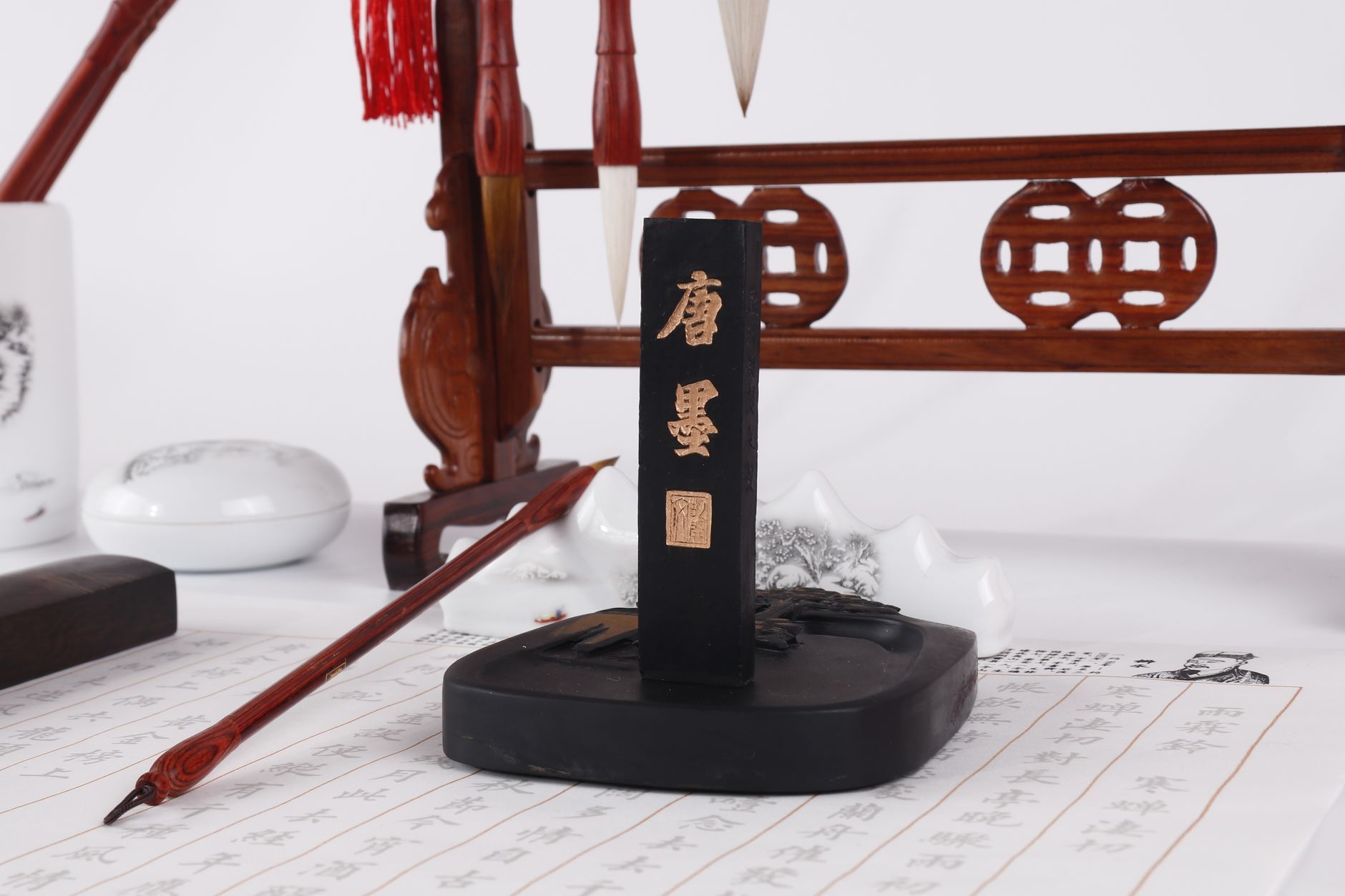
Chinese calligraphy (书法 shūfǎ, literally "the method of writing") is one of the oldest and most revered art forms in Chinese culture. For over 3,000 years, the brush has been the primary tool of scholars, poets, and artists. But calligraphy is not just art — it is also one of the most effective ways to internalize Chinese characters, understand stroke structure, and develop a physical connection with the language that no keyboard can replace.
This guide takes you from complete beginner to your first practice sessions: the tools you need, the basic strokes, proper technique, and a structured routine to build your skills.
What Is Chinese Calligraphy?
Calligraphy goes beyond simply writing characters neatly. It is the art of expressing beauty, emotion, and personality through brush strokes. Each stroke has a beginning, middle, and end — with variations in pressure, speed, and angle creating different visual effects.
In traditional Chinese culture, calligraphy holds a uniquely elevated position among the arts. It is considered one of the "Three Perfections" (三绝 sān jué), alongside poetry and painting, and was historically regarded as the highest form of visual art. For centuries, a person's calligraphy was seen as a direct reflection of their character, education, and moral cultivation. Scholars and government officials were judged not only by the content of their writing but also by the quality of their brushwork. During imperial examinations, poor calligraphy could disqualify an otherwise brilliant candidate.
Unlike Western calligraphy, which focuses primarily on letterforms and decorative scripts, Chinese calligraphy is deeply intertwined with philosophy, particularly Daoist and Buddhist thought. The practice emphasizes balance between opposing forces: thick and thin, fast and slow, heavy and light, dense and sparse. This connection to philosophical principles is why calligraphy has long been practiced as a form of moving meditation. The act of grinding ink on the inkstone, loading the brush, and executing each stroke with full attention creates a mindful rhythm that quiets mental chatter and brings the practitioner into a state of focused calm.
Calligraphy also differs fundamentally from regular handwriting in several important ways. Handwriting prioritizes speed and legibility for daily communication. Calligraphy, on the other hand, treats each character as a complete composition, where spatial relationships, stroke thickness variation, and the interplay of ink density all contribute to the overall aesthetic. In handwriting, you use a pen or pencil with a rigid tip. In calligraphy, the flexible brush tip responds to every subtle change in pressure and angle, giving each stroke a three-dimensional quality that rigid writing tools cannot achieve. This responsiveness is what makes calligraphy both challenging and deeply rewarding to practice.
🎨
Art Form
Prized alongside painting as a high art
🧘
Meditation
Requires focus that calms the mind
📝
Learning Tool
Reinforces character memory deeply
🏛️
Cultural Heritage
UNESCO Intangible Cultural Heritage
The Four Treasures of the Study
Traditional calligraphy requires the 文房四宝 (wénfáng sì bǎo) — the Four Treasures of the Study. These four tools have been the foundation of Chinese writing and painting for over two thousand years, and each one plays a specific role in the creative process:
| Treasure | Chinese | Description | Beginner Tip |
|---|---|---|---|
| Brush (笔) | 毛笔 (máobǐ) | Made from animal hair — wolf, goat, or mixed | Start with a medium wolf-hair brush for Regular Script |
| Ink (墨) | 墨 (mò) | Ink stick ground on inkstone with water, or bottled ink | Bottled ink is fine for practice — saves time |
| Paper (纸) | 宣纸 (xuānzhǐ) | Absorbent rice paper (Xuan paper) | Practice on newspaper or grid paper first |
| Inkstone (砚) | 砚台 (yàntái) | Stone slab for grinding ink stick with water | Not needed if using bottled ink |
The brush (毛笔 máobǐ) is the most important of the four treasures. Brushes are categorized by their hair type: wolf hair (狼毫 lángháo) produces firm, sharp strokes ideal for Regular Script; goat hair (羊毫 yángháo) is softer and more absorbent, favored for expressive Running and Cursive styles; and mixed hair (兼毫 jiānháo) blends both qualities and works well for beginners. The size of the brush matters too — a medium brush with a tip about one centimeter in diameter is the most versatile starting point.
Ink (墨 mò) comes in two forms: ink sticks and bottled liquid ink. Traditional ink sticks are made from pine soot or oil soot mixed with animal glue, then pressed into decorative molds. Grinding the ink stick in small circles on a wet inkstone is itself a meditative ritual that helps the calligrapher settle into focused concentration before writing. The grinding process lets you control the ink density — more grinding produces thicker, darker ink. Bottled ink is perfectly acceptable for practice sessions, but many experienced calligraphers prefer the subtle tonal variations that freshly ground ink provides.
Xuan paper (宣纸 xuānzhǐ) is the traditional paper of choice because its absorbent fibers interact beautifully with ink, allowing for subtle variations in tone and texture. Raw Xuan paper (生宣 shēng xuān) is highly absorbent and favored for expressive styles, while treated Xuan paper (熟宣 shú xuān) has a sizing agent that slows ink absorption, making it more forgiving for beginners. For your earliest practice sessions, newspaper or inexpensive practice paper with printed grid lines is an economical choice that lets you focus on stroke mechanics without worrying about wasting expensive materials.
The inkstone (砚台 yàntái) serves as both grinding surface and ink reservoir. Fine-grained stones from Guangdong (端砚 Duān yàn) and Anhui (歙砚 Shè yàn) are the most prized, but any smooth-surfaced inkstone will work for beginners. If you use bottled ink, a small ceramic dish can serve the same purpose as an inkstone for holding and diluting your ink.
The Five Major Styles
Chinese calligraphy has evolved through five major scripts, each with distinct characteristics:
| Style | Chinese | Era | Characteristics |
|---|---|---|---|
| Seal Script | 篆书 (zhuànshū) | ~2000 BC | Oldest style, round and symmetrical, used on official seals |
| Clerical Script | 隶书 (lìshū) | ~200 BC | Wider, flatter strokes with distinctive "wave" endings |
| Regular Script ⭐ | 楷书 (kǎishū) | ~200 AD | Standard style used today — clear, structured, best for beginners |
| Running Script | 行书 (xíngshū) | ~200 AD | Semi-cursive, strokes may connect, faster to write |
| Cursive Script | 草书 (cǎoshū) | ~200 AD | Highly simplified, abstract, often illegible to non-experts |
Understanding the historical progression of these five styles gives you valuable context for your own practice. Seal Script, the most ancient form, was standardized by the first emperor Qin Shi Huang as part of his effort to unify Chinese writing. Its rounded, symmetrical forms are still used today on official seals and name chops, giving this ancient script a living connection to modern life. Clerical Script emerged as government clerks needed a faster writing method, flattening the round forms of Seal Script into wider, more horizontal characters with distinctive wave-like endings on certain strokes.
Regular Script, developed during the late Han and Wei-Jin periods, became the standard for printed text and formal writing. It is the style taught in schools throughout China today and the foundation that all calligraphy students should master first. Its clear structure and consistent proportions make it the ideal script for developing proper technique. Running Script evolved as a natural acceleration of Regular Script, where some strokes connect and simplify while the overall structure remains recognizable. Most everyday handwriting in Chinese naturally tends toward Running Script. Cursive Script takes simplification to its extreme — strokes merge, characters compress, and the result is a highly expressive but often illegible art form that prioritizes energy and rhythm over readability.
Each style is associated with legendary calligraphers whose works remain the gold standard for study. Wang Xizhi (王羲之, 303-361 AD), often called the Sage of Calligraphy, is celebrated for his masterful Running Script, particularly his famous Preerta of Orchid Pavilion (兰亭序 Lántíng Xù). Yan Zhenqing (颜真卿, 709-785 AD) developed a bold, powerful Regular Script style known for its thick, muscular strokes, and his work is often the first model that beginners copy. Liu Gongquan (柳公权, 778-865 AD) created a contrasting Regular Script style with sharp, angular precision. Zhao Mengfu (赵孟頫, 1254-1322 AD) of the Yuan Dynasty brought elegance and fluidity to Regular Script, and his style remains widely studied. For beginners, copying the works of Yan Zhenqing or Liu Gongquan is the most common starting approach, as their clear, well-defined strokes are easier to analyze and replicate.
The Eight Basic Strokes (永字八法)
The character 永 (yǒng, eternal) contains all eight fundamental strokes of Chinese calligraphy. This is why it has been the starting point for calligraphy students for over 1,500 years:
| # | Stroke Name | Chinese | Direction | Key Technique |
|---|---|---|---|---|
| 1 | Dot | 点 (diǎn) | Press down and lift | Short, decisive — like a stone dropping |
| 2 | Horizontal | 横 (héng) | Left to right | Slightly upward angle, press at start and end |
| 3 | Vertical | 竖 (shù) | Top to bottom | Straight and strong, like a pillar |
| 4 | Hook | 钩 (gōu) | Sharp turn at end | Pause, then flick in the hook direction |
| 5 | Left-falling | 撇 (piě) | Upper right to lower left | Start thick, taper to thin — like a knife |
| 6 | Right-falling | 捺 (nà) | Upper left to lower right | Start thin, press heavier, then lift at the end |
| 7 | Rising | 提 (tí) | Lower left to upper right | Quick upward flick — light and energetic |
| 8 | Turning | 折 (zhé) | Direction change | Pause at the corner, then change direction cleanly |
When practicing each stroke, pay close attention to three phases: the entry (起笔 qǐ bǐ), the body (行笔 xíng bǐ), and the exit (收笔 shōu bǐ). The entry is where you place the brush tip on the paper and establish the stroke's initial shape. In Regular Script, most entries use a technique called "hidden tip" (藏锋 cáng fēng), where the brush first moves slightly opposite to the stroke direction before reversing into the main movement. This creates clean, rounded beginnings rather than sharp, exposed points. The body of the stroke requires steady, controlled movement at a consistent speed. The exit is where you either lift the brush cleanly, pause and reverse slightly, or flick to create a hook or taper. Mastering these three phases for each of the eight basic strokes gives you the building blocks for writing any Chinese character.
A practical approach to stroke practice is to dedicate focused sessions to individual strokes before combining them into characters. Write a single horizontal stroke fifty times, paying attention to consistent thickness, angle, and length. Then do the same with vertical strokes. Only when you feel comfortable with individual strokes should you attempt full characters. This isolated stroke practice may feel tedious, but it builds the muscle memory and brush control that will make your character writing much stronger in the long run.
Essential Techniques
✋ Brush Grip
Hold the brush vertically with three fingers (thumb, index, middle) near the upper-middle of the handle. Keep your wrist elevated — do not rest it on the paper. Your entire arm should move, not just your fingers.
🪶 Pressure Control
Press harder for thick strokes, lighter for thin ones. Each stroke begins with a "hidden tip" entry — press down then pull to start cleanly. This creates the characteristic "bone structure" of good calligraphy.
🧍 Posture
Sit upright with both feet flat on the floor. The paper should be directly in front of you. Your non-writing hand holds the paper steady. Breathe naturally and maintain relaxed shoulders.
⚡ Speed
Beginners should write slowly and deliberately. Speed comes naturally with practice. Rushing produces messy strokes. Think of each stroke as having a beginning, journey, and ending.
Beyond these core techniques, ink loading is a skill that beginners often overlook. Dip your brush fully into the ink, then gently press the tip against the side of the ink dish to remove excess and shape the bristles into a fine point. Too much ink causes blotchy, uncontrolled strokes, while too little ink produces dry, scratchy marks. The ideal ink load produces strokes that are rich and dark in the center with slightly lighter edges. As you gain experience, you will learn to use intentional ink variation — starting a character with a fully loaded brush and allowing the ink to gradually thin as you write creates a natural rhythm of dark and light called "dry brush" (枯笔 kū bǐ) effects, which advanced calligraphers use for expressive purposes.
The concept of "structure" (结构 jiégòu) in calligraphy refers to how the individual strokes are arranged within the imaginary square that each character occupies. Good structure means balanced proportions, consistent spacing between strokes, and appropriate density distribution. Characters should feel centered and stable, neither leaning to one side nor appearing cramped or overly spread out. Using grid paper with cross-hairs helps beginners develop an eye for structure by providing visual reference points for stroke placement.
Best Characters to Practice First
After mastering the eight basic strokes with 永, progress through these characters in order of increasing complexity:
| Level | Characters | Strokes Practiced |
|---|---|---|
| Week 1 | 一 二 三 十 | Horizontal, vertical strokes |
| Week 2 | 人 大 天 太 | Left-falling, right-falling, dot |
| Week 3 | 口 日 月 山 | Turning, enclosed structures |
| Week 4 | 水 木 火 土 | Complex combinations, hooks |
The characters in the table above are chosen not only for their simplicity but also because they introduce you to fundamental structural concepts one at a time. Week one focuses purely on horizontal and vertical strokes, the two most basic movements. The characters 一, 二, and 三 teach you to space parallel horizontal strokes evenly, while 十 introduces the critical intersection of horizontal and vertical strokes. Week two adds diagonal strokes and the dot, with 人 and 大 teaching you to balance left-falling and right-falling strokes symmetrically. Week three introduces enclosed structures through characters like 口 (a simple box) and 日 (a divided box), which require precise turning strokes and proportional division of interior space. By week four, you are combining all stroke types in more complex characters like 水 and 火, which demand confident hook strokes and careful balance of multiple elements.
As you move beyond these foundational characters, a powerful study method is to practice by copying classical copybooks (字帖 zìtiè). These are printed collections of exemplary characters by master calligraphers, and they serve as your primary teacher in the absence of a live instructor. Place the copybook next to your practice paper and carefully observe each stroke before attempting to reproduce it. Study the thickness variations, the angles, the spacing, and the overall proportions. Then write the character several times, comparing each attempt to the original. This process of careful observation followed by deliberate practice is how calligraphers have trained for centuries.
Daily Practice Routine
30-Minute Daily Practice
5 min: Warm up — draw circles, waves, and straight lines to loosen your arm
10 min: Stroke practice — choose 2-3 basic strokes and repeat each 20 times
10 min: Character practice — write today's target character 15-20 times
5 min: Free practice — write a character you enjoy for relaxation
Consistency matters far more than session length. Thirty minutes of focused daily practice will produce better results than sporadic two-hour sessions on weekends. The physical motions of calligraphy are built through repetition over time, and your muscle memory develops most effectively with regular, spaced practice. Many practitioners find that calligraphy becomes the most enjoyable part of their day — a quiet half hour of focused attention that serves as a counterbalance to the constant digital stimulation of modern life.
Modern calligraphy is experiencing a significant revival around the world. In China, calligraphy education has been reintroduced into school curricula, and calligraphy competitions attract thousands of participants. Outside of China, interest in Chinese calligraphy has grown alongside the broader popularity of mindfulness practices, as people discover that brush writing offers the same mental health benefits as meditation: reduced stress, improved focus, and a sense of creative accomplishment. Social media platforms have also played a role in this revival, with calligraphy videos attracting millions of viewers who are drawn to the mesmerizing rhythm of brush on paper. Whether you approach calligraphy as a cultural pursuit, a language learning tool, or a meditative practice, the skills you develop through regular brush work will deepen your appreciation for Chinese characters and connect you to one of humanity's longest continuous artistic traditions.
Use our Stroke Order tool to learn the correct sequence for any character, and generate structured practice sheets with grid guidelines. For character fundamentals, see our guides on learning Chinese characters and Chinese radicals.
🔧 Try These Tools
Frequently Asked Questions
Do I need special brushes for calligraphy? ▼
Traditional Chinese calligraphy uses the Four Treasures of the Study (文房四宝): brush, ink, paper, and inkstone. However, beginners can start with a regular brush pen (毛笔) or even felt-tip markers to learn stroke control before investing in traditional tools.
What are the main calligraphy styles? ▼
The five main styles are: Seal Script (篆书), Clerical Script (隶书), Regular Script (楷书), Running Script (行书), and Cursive Script (草书). Beginners should always start with Regular Script (楷书) as it is the most structured and teaches proper stroke fundamentals.
How long does it take to learn calligraphy? ▼
Basic competency in Regular Script takes 6-12 months of consistent daily practice (30-60 minutes). Developing a personal style and mastering Running or Cursive Script takes 3-5+ years. Many calligraphers consider it a lifelong pursuit.
Can calligraphy help me learn Chinese characters? ▼
Absolutely. Calligraphy practice reinforces stroke order, improves character recognition, and deepens your understanding of character structure and radicals. Many learners find that characters they practice in calligraphy are much easier to remember.
Is left-handed calligraphy possible? ▼
Traditional calligraphy is designed for right-handed use due to stroke direction conventions. Left-handed writers can practice, but may need to adjust their paper angle and brush grip. Some modern calligraphers do write left-handed successfully with adapted techniques.
Language Education Specialist
Yang Lin is a Taiwan-based bilingual educator specializing in Mandarin Chinese and Japanese instruction. With over 10 years of experience helping learners worldwide master East Asian languages, Yang creates practical tools and structured study guides that make language learning accessible, effective, and enjoyable. She holds a degree in Applied Linguistics and has taught students from more than 20 countries.
🗾 Interested in Japanese? Read our Japanese learning blog →